Blog

  • Sustainable Growth in International Enrollment Strategies

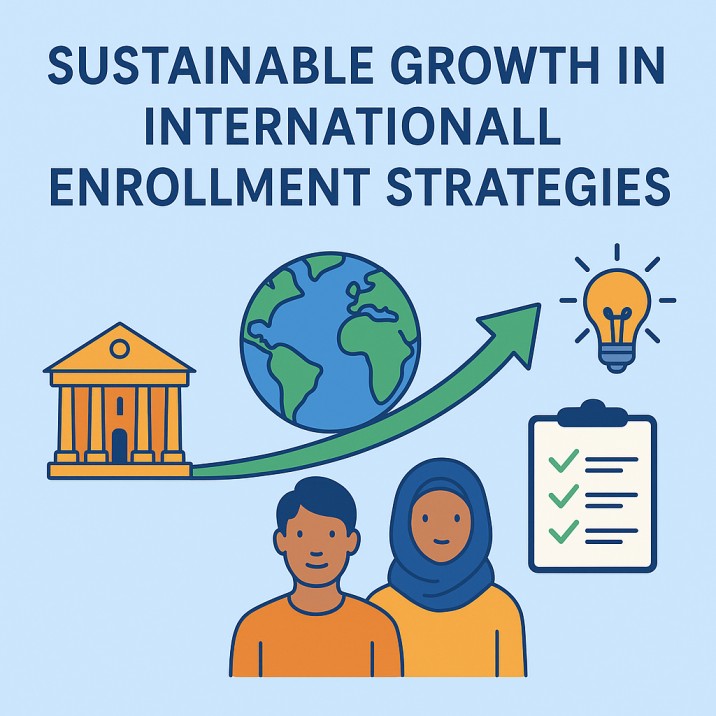
    Sustainable Growth in International Enrollment Strategies

    International enrollment is more than just increasing student numbers—it’s about building a strategy that lasts. While many institutions chase quick wins through aggressive recruitment, the most successful universities focus on sustainable international enrollment. This means developing approaches that balance growth with compliance, student support, and long-term institutional goals. By prioritizing sustainability, universities not only protect their reputation but also create consistent pipelines of diverse, qualified international students who thrive throughout their academic journey.

    Why Sustainability Matters in International Enrollment

    For many universities, international enrollment strategies often focus on short-term boosts—aggressive recruitment campaigns, one-time partnerships, or reliance on a single market. While these efforts may increase numbers temporarily, they rarely lead to lasting success.

    A sustainable international enrollment strategy ensures long-term stability by:

    • Diversifying Student Markets – Reducing dependence on one or two countries prevents sudden enrollment drops caused by political or economic shifts.

    • Strengthening Institutional Reputation – Universities that consistently support international students build stronger word-of-mouth networks and alumni advocacy.

    • Improving Student Retention – Sustainability isn’t just about recruitment; it’s about keeping students engaged, supported, and on track to graduate.

    • Aligning with Institutional Mission – Growth should reflect the university’s strengths and values, ensuring authentic and mission-driven recruitment.

    • Adapting to Global Trends – Sustainable strategies are flexible and evolve with changing demographics, visa policies, and global student demand.

    In short, focusing on sustainability helps universities avoid short-term fixes and build resilient international enrollment pipelines that thrive over decades.

    Key Principles of Sustainable International Enrollment

    Building a truly sustainable international enrollment strategy requires more than just marketing. Universities must integrate long-term thinking into every stage of the student journey. The following principles form the foundation:

    1. Market Diversification

    Relying on a single source country is risky. Expanding into multiple regions spreads opportunity and builds resilience.

    2. Compliance and Risk Management

    A sustainable strategy ensures consistent SEVIS compliance, visa support, and clear institutional policies that protect both students and the university.

    3. Student Support & Retention

    Retention is just as important as recruitment. Providing housing, advising, mental health resources, and cultural integration programs improves graduation rates and alumni success.

    4. Digital Visibility & SEO

    Strong international student recruitment SEO ensures your institution is discoverable online by students worldwide. This long-term investment pays dividends far beyond short campaigns.

    5. Partnerships & Networks

    Sustainable growth relies on building trusted, long-term relationships with recruiters, schools, and counselors in multiple regions.

    6. Alignment with Institutional Mission

    Recruitment goals should reflect academic strengths and institutional values, creating authentic connections that attract the right students.

    By focusing on these principles, universities create an enrollment model that grows steadily, adapts to change, and continues delivering results year after year.

    Common Mistakes That Prevent Sustainable Enrollment

    While many universities aim for growth, some fall into patterns that undermine long-term success. The most common mistakes include:

    1. Over-Reliance on One Market

    Focusing recruitment on a single country (such as China or India) creates vulnerability to sudden policy or economic changes.

    2. Short-Term Recruitment Campaigns

    Quick enrollment boosts through one-off partnerships or paid ads may increase numbers temporarily but don’t build steady pipelines.

    3. Neglecting Student Support

    Bringing students in without providing strong advising, housing, or integration services leads to poor retention and reputational harm.

    4. Ignoring Compliance Risks

    Failing to prioritize SEVIS accuracy, visa guidance, and immigration support puts both students and the institution at risk.

    5. Weak Digital Presence

    Without a consistent international marketing and SEO strategy, universities remain invisible to the global student audience actively searching online.

    6. Treating Enrollment as a Standalone Effort

    When enrollment goals aren’t aligned with institutional mission or faculty engagement, sustainability breaks down.

    By avoiding these pitfalls, universities can shift from short-term fixes to strategies that foster resilience, trust, and long-term growth.

    The Role of GEP in Building Sustainable International Enrollment

    Creating a sustainable international enrollment strategy requires more than ambition—it requires experience, global networks, and a comprehensive approach. That’s why universities turn to Global Enrollment Partners (GEP).

    GEP supports institutions with:

    • Strategic Enrollment Consulting – Conducting 360-degree evaluations and creating customized, mission-aligned growth blueprints.

    • Credential Evaluation Services – Partnering with MyEvaluationPal to deliver accurate and secure transcript evaluations, reducing delays and confusion.

    • International Marketing & SEO – Building strong online visibility so universities can attract students across multiple markets.

    • Global Recruitment Partnerships – Leveraging a worldwide network of recruiters and counselors to diversify student pipelines.

    • Compliance & Risk Management – Ensuring SEVIS accuracy, visa guidance, and study abroad risk reduction.

    • Student-Centered Solutions – Supporting retention by focusing on cultural integration, advising, and student success initiatives.

    By combining these services, GEP enables institutions to not only increase enrollment but to do so in a way that is consistent, diversified, and sustainable for the long term.

    Building a Future-Proof International Enrollment Strategy

    Sustainable growth in international enrollment is not about quick fixes or chasing short-term numbers. It’s about creating strategies that balance recruitment, compliance, student support, and global engagement. Universities that prioritize sustainability strengthen their reputation, diversify their pipelines, and build long-term resilience in an increasingly competitive landscape.

    The institutions that succeed are those that take a holistic approach—one that sees international enrollment not as a one-time initiative but as a lasting commitment to global education. By focusing on diversification, compliance, and student-centered services, universities can ensure that their international programs continue to thrive for years to come.

    That’s where Global Enrollment Partners comes in. With decades of expertise in higher education and international recruitment, GEP helps universities design strategies that deliver real results—safely, sustainably, and in alignment with institutional goals.

    If your university is ready to move beyond short-term campaigns and build a future-proof enrollment strategy, now is the time to act. Partner with Global Enrollment Partners and turn sustainable international enrollment into your institution’s competitive advantage.
  • Top Challenges in International Student Enrollment (and How to Solve Them)

    Top Challenges in International Student Enrollment (and How to Solve Them)

    Attracting and retaining international students is one of the most pressing priorities for universities worldwide. While global demand for higher education continues to rise, institutions face mounting barriers that can make international enrollment both complex and competitive. From compliance requirements to digital visibility challenges, even well-established universities encounter obstacles that limit growth. Understanding the most common challenges in international student enrollment is the first step to building solutions that not only improve recruitment but also strengthen institutional reputation.

    The Most Common Challenges in International Student Enrollment

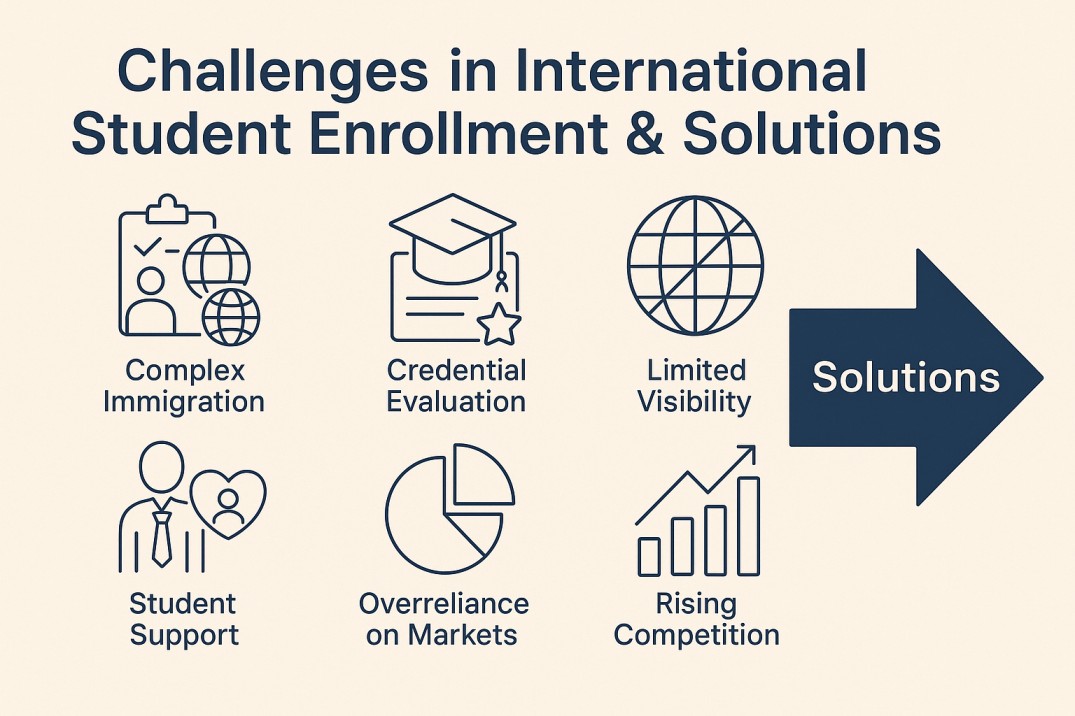
    Despite the growing demand for global education, many universities encounter similar barriers when trying to expand their international reach. The most common challenges in international student enrollment include:

    1. Complex Immigration & Compliance Requirements

    Visa regulations, SEVIS reporting, and government policies vary across regions and often change with little warning. Failure to remain compliant can cause delays, denials, or even threaten an institution’s ability to host international students.

    2. Credential Evaluation Difficulties

    Admissions teams frequently struggle to interpret transcripts and qualifications from diverse education systems. Without consistent standards, students may face delays or uncertainty in admissions decisions.

    3. Limited Global Visibility

    In today’s digital-first environment, many universities lack a strong online presence. Without effective international student recruitment SEO and digital marketing, institutions miss out on qualified applicants actively searching online.

    4. Student Support Gaps

    International students need additional support for housing, healthcare, cultural adjustment, and academic advising. Universities that fail to provide robust support risk low retention rates and weaker student satisfaction.

    5. Overreliance on a Few Markets

    Depending heavily on applicants from just one or two countries (such as China or India) leaves institutions vulnerable to sudden political or economic changes.

    6. Rising Competition Among Universities

    As more universities worldwide expand their recruitment strategies, students have more choices. Standing out in a competitive market requires more than just academic excellence.

    How Universities Can Solve These Challenges

    While the obstacles are significant, each of the common challenges in international student enrollment can be overcome with the right strategies and partnerships.

    1. Navigating Immigration & Compliance

    • Solution: Universities should invest in training for Designated School Officials (DSOs), maintain strict SEVIS protocols, and partner with compliance experts who can monitor changing regulations. Temporary DSO placement services can ensure continuity during staff transitions.

    2. Streamlining Credential Evaluation

    • Solution: Work with trusted providers such as MyEvaluationPal, which offers fast, accurate, and institution-focused credential evaluations. This eliminates delays and provides admissions officers with reliable data for decision-making.

    3. Improving Global Visibility

    • Solution: Build a strong international student recruitment SEO strategy, optimize program pages for country-specific searches, and invest in digital campaigns that target priority regions.

    4. Strengthening Student Support Systems

    • Solution: Develop tailored support for international students, including pre-departure orientation, cultural integration programs, housing assistance, and academic advising. Student-centered services improve retention and satisfaction.

    5. Diversifying Recruitment Markets

    • Solution: Expand recruitment partnerships to multiple regions instead of relying on one or two countries. This reduces vulnerability and strengthens institutional resilience.

    6. Competing Effectively in a Crowded Market

    • Solution: Universities should highlight their unique value propositions—specialized programs, research opportunities, or global partnerships—and use authentic student stories to connect with prospective applicants.

    By addressing these areas proactively, universities not only solve immediate enrollment challenges but also create sustainable frameworks for long-term international growth.

    The Role of GEP in Helping Universities Overcome Enrollment Challenges

    For many institutions, solving the barriers to international enrollment requires more than internal effort—it requires expert guidance and global networks. This is where Global Enrollment Partners (GEP) makes a measurable difference.

    GEP helps universities address the toughest international student enrollment challenges by offering:

    • Strategic Enrollment Consulting – A 360-degree evaluation of enrollment strengths and weaknesses, with a customized blueprint for sustainable growth.

    • Credential Evaluation Services – Through its partnership with MyEvaluationPal, GEP delivers accurate, fast, and secure transcript evaluations tailored for institutional needs.

    • Digital Marketing & SEO – GEP builds a strong online presence for universities, improving visibility across global markets and increasing qualified applications.

    • Temporary DSO Placement – Ensuring continuity of SEVIS compliance during staffing transitions, reducing compliance risks.

    • Risk Management for Study Abroad – Helping universities safeguard students and maintain program quality in high-risk global environments.

    • Global Recruitment Partnerships – Leveraging a worldwide network of recruiters and counselors to expand reach into multiple regions.

    Unlike one-size-fits-all solutions, GEP tailors strategies to each institution’s mission, size, and goals. This ensures that universities don’t just overcome short-term barriers but also achieve long-term success in international enrollment.

    Turning Enrollment Challenges into Opportunities

    International enrollment is no longer a side initiative—it is a core driver of growth, diversity, and global reputation for universities. Yet, the path is rarely simple. From navigating complex immigration rules and evaluating credentials to building digital visibility and supporting student success, the challenges in international student enrollment can feel overwhelming.

    The difference between institutions that struggle and those that thrive often comes down to strategy and support. Universities that take a proactive approach, invest in the right tools, and partner with experts are the ones that turn challenges into competitive advantages.

    That’s exactly what Global Enrollment Partners provides. With over two decades of experience in international higher education, GEP helps institutions create enrollment strategies that are compliant, sustainable, and globally effective. By combining consulting, credential evaluation, digital marketing, DSO placement, and risk management, GEP delivers end-to-end solutions that give universities confidence in every stage of the enrollment process.

    If your institution is ready to move beyond short-term fixes and build a future-proof international enrollment strategy, now is the time to act. Partner with Global Enrollment Partners and transform today’s challenges into tomorrow’s global success stories.

  • International Marketing & SEO for Higher Education: How Universities Can Attract More Students Online

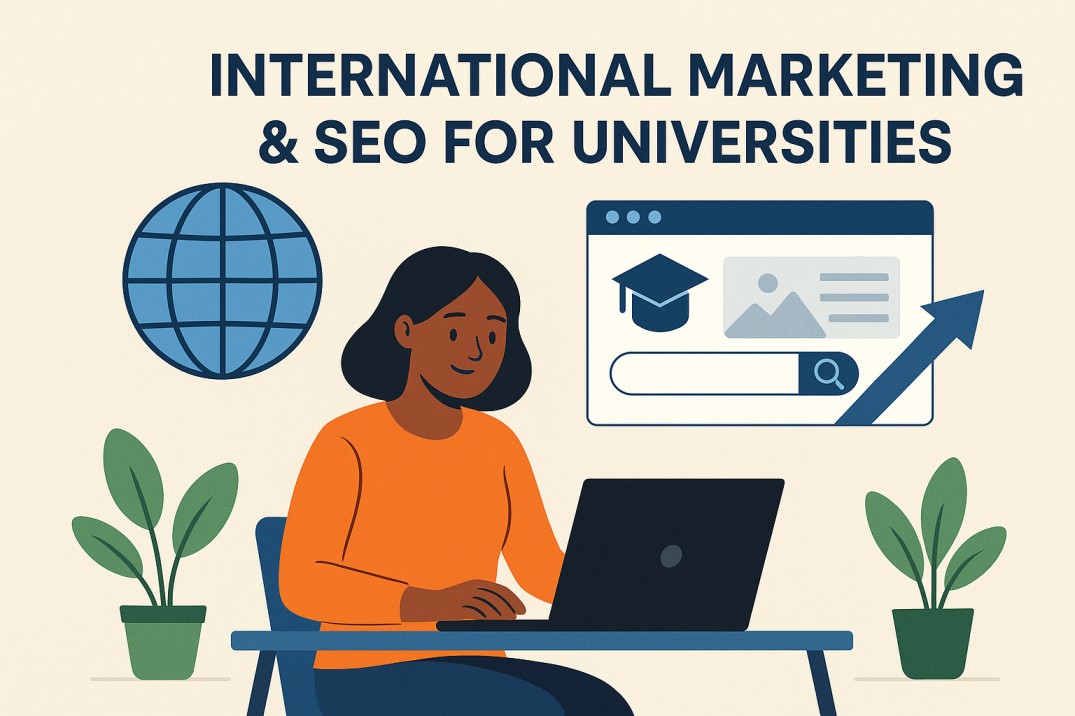
    International Marketing & SEO for Higher Education: How Universities Can Attract More Students Online

    In today’s digital-first world, international students begin their university search online. From researching programs on search engines to comparing institutions on social media, the online presence of a university plays a critical role in influencing decisions. Without a strong international marketing and SEO strategy, even the best academic programs risk being overlooked. By investing in digital visibility, universities can expand their reach, attract qualified international applicants, and build a sustainable pipeline of global students. For institutions committed to growth, international recruitment must begin with a strong online strategy.

    Why Online Marketing Matters in International Student Recruitment

    The way students choose universities has changed dramatically. Instead of relying solely on brochures, education fairs, or word-of-mouth, international applicants now start their journey with a search query. According to recent surveys, most prospective students use Google as their first step in exploring study options abroad. This makes international student recruitment SEO and digital marketing essential tools for any university.

    Strong digital marketing for universities matters because it:

    • Expands Global Reach – SEO ensures your university is visible to students searching across different countries and regions.

    • Builds Trust and Credibility – A well-optimized website with clear program details and student testimonials reassures applicants.

    • Increases Application Volume – Online visibility translates directly into more inquiries, applications, and enrollments.

    • Improves Engagement – Social media campaigns, targeted ads, and optimized landing pages keep students engaged with your institution.

    • Strengthens Brand Identity – A consistent online strategy helps universities stand out in an increasingly competitive global education market.

    In short, a strong higher education online marketing strategy is no longer optional. It is the foundation for attracting and converting international students in a digital age.

    Key Elements of an International Marketing & SEO Strategy for Universities

    A successful international marketing and SEO strategy requires a combination of technical optimization, engaging content, and student-centered outreach. The most effective universities focus on these core elements:

    • Search Engine Optimization (SEO) – Optimizing program pages, country-specific content, and blogs with keywords like study in the USA or best universities for international students ensures visibility in global search results.

    • Localized Content – Creating tailored content for different regions (e.g., guides for students from India, Nigeria, or Brazil) makes your university more relevant to diverse audiences.

    • Mobile-Friendly Website – Most international students browse on mobile devices. A responsive site improves user experience and increases conversions.

    • Paid Digital Advertising – Google Ads, Facebook, and LinkedIn campaigns can target specific regions and demographics with high intent.

    • Social Media Engagement – Platforms like Instagram, TikTok, and YouTube allow universities to showcase campus life and success stories authentically.

    • Content Marketing – Blogs, student testimonials, and video tours build trust while also improving search rankings.

    • Conversion Optimization – Clear calls-to-action, easy inquiry forms, and live chat support make it simple for prospective students to take the next step.

    Together, these elements create a comprehensive strategy that not only attracts more international traffic but also converts interest into real applications.

    Common Mistakes Universities Make in Online Recruitment

    While many institutions invest in digital marketing for universities, not all efforts lead to results. Common mistakes often limit success in attracting international students:

    • Ignoring SEO Fundamentals – Without keyword research or optimized program pages, even well-designed websites remain invisible to global applicants.

    • Generic Messaging – Using the same content for all audiences overlooks the cultural and academic differences of international students.

    • Slow or Outdated Websites – A site that loads poorly on mobile or isn’t user-friendly quickly discourages prospective applicants.

    • Overreliance on Paid Ads – While ads can boost visibility, they cannot replace the long-term benefits of strong international student recruitment SEO.

    • Lack of Multilingual Support – Many students search in their native languages. Universities that fail to provide localized or translated content miss out on large applicant pools.

    • Weak Follow-Up Systems – Attracting inquiries without a solid CRM or admissions response strategy results in lost opportunities.

    These pitfalls not only reduce applications but can also harm a university’s reputation in the global market. Avoiding them is the first step toward building a strong and sustainable online recruitment pipeline.

    The Role of GEP in International Marketing & SEO

    For many universities, building an effective international student recruitment SEO strategy requires expertise, time, and resources that internal teams may not have. This is where Global Enrollment Partners (GEP) provides a distinct advantage.

    GEP helps institutions strengthen their higher education online marketing strategy through:

    • Customized SEO Plans – Optimizing websites and program pages for country-specific keywords to increase global search visibility.

    • Localized Digital Campaigns – Creating targeted content and ads that resonate with students in key markets.

    • International Branding Support – Building a consistent online identity across websites, search engines, and social platforms.

    • Lead Generation & Conversion – Driving qualified traffic and improving application rates with optimized landing pages and student-focused content.

    • Long-Term Growth – Unlike one-off campaigns, GEP emphasizes sustainable strategies that deliver results year after year.

    By combining deep expertise in higher education with proven digital marketing strategies, GEP enables universities to expand their reach, build credibility, and attract more international applications.

    Measuring Success in International Student Recruitment SEO

    A strong international marketing and SEO strategy should deliver results that are both visible and measurable. To ensure efforts are paying off, universities should track key performance indicators (KPIs) such as:

    • Website Traffic Growth – Increases in visits from target countries show that SEO and marketing campaigns are reaching the right audiences.

    • Search Rankings – Tracking keywords like study in the USA or best universities for international students reveals whether optimization is improving visibility.

    • Inquiry and Lead Volume – Growth in form submissions, brochure downloads, and information requests indicates stronger engagement.

    • Application Rates – More international applications confirm that online marketing is converting interest into action.

    • Cost per Acquisition (CPA) – Evaluating how much it costs to attract each new student ensures resources are used efficiently.

    • Social Engagement – Higher interaction rates on platforms like Instagram, YouTube, or LinkedIn reflect a stronger global brand presence.

    • Conversion Rates – The percentage of website visitors who complete an application or inquiry is the clearest sign of marketing effectiveness.

    Turning Digital Presence into Enrollment Growth

    In today’s competitive higher education landscape, international recruitment begins long before a student sets foot on campus—it starts with a search query. Without a robust international marketing and SEO strategy, universities risk being invisible to the very students they hope to attract.

    Why Universities Need a Clear Strategy

    From SEO-driven content and localized campaigns to mobile-friendly websites and social engagement, digital visibility is no longer optional; it is essential. A scattered approach won’t work when students have endless choices.

    How GEP Helps Institutions Thrive

    That’s where Global Enrollment Partners (GEP) makes the difference. With proven expertise in higher education marketing and international enrollment, GEP helps universities craft strategies that expand reach, build trust, and drive real application growth. Their focus on sustainable, long-term results ensures that institutions don’t just compete globally—they thrive.


  • Temporary DSO Placement: Why It Matters for SEVIS Compliance

    Temporary DSO Placement: Why It Matters for SEVIS Compliance

    Universities that enroll international students carry a critical responsibility: maintaining SEVIS compliance. However, unexpected staff changes or vacancies can leave institutions without a qualified Designated School Official (DSO)—a role that is legally required by the U.S. Department of Homeland Security. When this happens, institutions risk serious compliance violations that can affect both students and the school’s standing with SEVP. This is why temporary DSO services are essential. By placing an experienced professional immediately, universities can ensure continuity, protect their international students, and avoid costly compliance issues.

    What Is a DSO and Why Their Role Is Essential?

    A Designated School Official (DSO) is the individual authorized by the U.S. Department of Homeland Security (DHS) to manage compliance for international students studying under F-1 or M-1 visas. DSOs are the direct link between the university, its international students, and the federal government.

    Their responsibilities include:

    • Maintaining SEVIS Records – Updating student status, program changes, and compliance details in the Student and Exchange Visitor Information System (SEVIS).

    • Issuing I-20 Forms – Providing students with the official document needed for visa applications, extensions, and transfers.

    • Ensuring Compliance with SEVP Regulations – Monitoring full-time enrollment, reporting violations, and supporting immigration-related requirements.

    • Advising International Students – Helping students understand their visa obligations and academic requirements.

    Without an active DSO, institutions risk falling out of compliance with SEVP, which can jeopardize their ability to host international students. This makes the role not only essential but also time-sensitive when vacancies occur.

    The Risks of Being Without a DSO

    When a university suddenly loses its Designated School Official, the consequences can be serious and immediate. SEVP regulations require institutions to maintain an active DSO at all times. Without one, both the institution and its students face significant risks:

    • SEVIS Violations – Failure to update or maintain accurate student records can trigger compliance issues with DHS.

    • Delayed Processing – Students may be unable to obtain or renew I-20s, apply for visas, or make status changes.

    • Student Disruption – International students depend on DSOs for immigration guidance. Without timely support, they may fall out of status.

    • Institutional Penalties – Schools risk warnings, sanctions, or even suspension of SEVP certification.

    • Reputation Damage – Families and students may lose confidence in the university’s ability to support international education.

    These risks highlight why temporary DSO services are not just a convenience but a safeguard for compliance and institutional credibility.

    How Temporary DSO Placement Works

    When institutions face a sudden vacancy, temporary DSO services provide immediate relief by placing an experienced professional who can manage SEVIS responsibilities without interruption. The process typically works like this:

    1. Institution Identifies a Vacancy – A DSO leaves unexpectedly due to resignation, illness, or internal transitions.

    2. Temporary Placement Request – The university partners with a service provider to request an interim DSO.

    3. Rapid Assignment – A qualified professional is assigned to the institution, often within days, to ensure continuity.

    4. SEVIS and I-20 Oversight – The temporary DSO maintains records, issues I-20s, and ensures compliance until a permanent hire is secured.

    5. Transition Support – Once a new DSO is appointed, the temporary professional transfers responsibilities smoothly, minimizing disruption.

    This approach ensures that universities never fall behind on SEVIS reporting and that international students continue to receive the support they need.

    Benefits of Temporary DSO Services for Universities

    Relying on temporary DSO placement offers universities several important advantages. Beyond filling a short-term staffing gap, it helps institutions safeguard compliance and maintain trust with students.

    • Ensures SEVIS Compliance – Keeps student records accurate and up to date, preventing violations and penalties.

    • Continuity of Service – Students continue to receive timely support with visas, I-20 forms, and enrollment requirements.

    • Protects Institutional Reputation – Demonstrates the university’s commitment to international student success, even during transitions.

    • Reduces Risk of Enrollment Loss – By avoiding delays or errors, institutions retain the confidence of students and families.

    • Provides Flexibility – Universities gain time to recruit the right permanent DSO without rushing the process.

    Ultimately, temporary DSO services act as a safety net, ensuring that international education programs run smoothly even when unexpected staffing challenges arise.

    The Role of GEP in Providing Temporary DSO Placement

    When a university loses a Designated School Official, the clock starts ticking on SEVIS compliance. That’s why institutions turn to Global Enrollment Partners (GEP) for fast, reliable temporary DSO services.

    GEP’s team of experienced professionals understands the complexities of SEVIS and international student support. Their approach includes:

    • Rapid Response – Quickly placing an interim DSO so institutions remain compliant without disruption.

    • Expert Knowledge of SEVP Regulations – Ensuring all reporting, record-keeping, and student advising align with DHS requirements.

    • Seamless Transition – Supporting institutions until a permanent DSO is appointed, then handing off responsibilities smoothly.

    • Institutional Alignment – Matching DSOs with the specific needs and scale of each university.

    • Student-Centered Support – Prioritizing the guidance and well-being of international students throughout the transition.

    With GEP, universities gain peace of mind knowing their compliance is secure and their students remain supported, even during staff turnover.

    Safeguarding SEVIS Compliance with Temporary DSO Placement

    For universities, the responsibility of supporting international students goes beyond academics—it requires ensuring that every compliance detail is handled with precision and care. The role of the Designated School Official (DSO) is at the heart of this responsibility. When a vacancy arises, even for a short period, the risks are immediate and significant: SEVIS violations, delayed student processing, frustrated families, and potential damage to an institution’s reputation.

    This is why temporary DSO placement is more than just a staffing solution. It’s a safeguard that protects international students, preserves institutional compliance, and demonstrates a university’s commitment to global education. By bringing in a qualified professional at a moment’s notice, institutions ensure that nothing slips through the cracks. Students can continue their journeys with confidence, and administrators can focus on long-term solutions rather than scrambling to fix emergencies.

    At Global Enrollment Partners, we understand how much is at stake. With over two decades of experience in international education and compliance, our team of experts provides universities with the support they need when they need it most. Whether it’s maintaining SEVIS records, issuing I-20 forms, or guiding international students through critical visa processes, our interim DSOs step in seamlessly and uphold the highest standards of compliance and care.

    In today’s competitive higher education environment, institutions cannot afford lapses in compliance or disruptions in student support. If your university is facing a staffing gap or simply wants to be prepared for the unexpected, now is the time to act. Partner with Global Enrollment Partners and ensure that your SEVIS compliance—and your students’ futures—remain secure, no matter what challenges arise.

  • Study Abroad Risk Management: Best Practices for Universities

    Study Abroad Risk Management: Best Practices for Universities

    Study abroad programs give students life-changing opportunities, but they also present some of the highest risks universities face. From health and safety concerns to political instability and compliance requirements, institutions must be proactive in protecting both students and the university itself. A well-structured study abroad risk management strategy doesn’t just prevent negative outcomes—it builds student confidence, strengthens institutional reputation, and ensures programs remain sustainable. For universities committed to global engagement, risk management is not an afterthought; it’s a critical foundation for every international program.

    Why Risk Management Is Critical in Study Abroad Programs

    Study abroad experiences can be transformative, but they also carry inherent risks. Unlike on-campus programs, international travel introduces factors outside of a university’s direct control—political changes, health emergencies, cultural misunderstandings, and even natural disasters. Without careful planning, these risks can escalate into serious safety issues or institutional liability.

    A proactive study abroad risk management plan helps universities:

    • Protect Student Safety – Ensures that students are prepared for health, security, and cultural challenges before they travel.

    • Safeguard Institutional Reputation – Prevents negative headlines and maintains trust with students, families, and partner institutions.

    • Comply with Regulations – Meets legal requirements for liability, travel insurance, and emergency preparedness.

    • Ensure Program Continuity – Reduces disruptions so students can continue their studies even during unexpected events.

    • Build Student Confidence – Parents and students are more likely to commit to study abroad programs when robust safety measures are in place.

    In short, strong risk management isn’t just about avoiding problems—it’s about making study abroad programs sustainable, trusted, and attractive to future students.

    Common Risks Universities Face in Study Abroad Programs

    When universities expand internationally, they must anticipate risks that go far beyond the classroom. Some of the most common challenges in study abroad risk management include:

    1. Health & Safety Risks

    Students may face medical emergencies, infectious diseases, or accidents while abroad. Without proper planning, these issues can quickly escalate and disrupt programs.

    2. Political & Security Risks

    Unrest, protests, or government policy changes can create unstable environments. Universities must evaluate host country conditions before sending students.

    3. Legal & Compliance Risks

    Each country has its own visa, insurance, and liability regulations. Failure to comply can expose institutions to fines, lawsuits, or program closures.

    4. Cultural & Social Risks

    Misunderstandings in behavior, communication, or cultural norms can lead to conflicts, mental health challenges, or isolation for students.

    5. Financial Risks

    Unexpected costs, currency fluctuations, or program cancellations can strain budgets for both students and universities.

    By identifying these risks early, universities can implement strategies to reduce exposure and safeguard the success of their international programs.

    Best Practices for Study Abroad Risk Management

    Effective study abroad risk management requires more than a reactive plan—it demands proactive systems that address risks before they arise. Universities that excel in managing international programs often apply the following best practices:

    • Conduct Thorough Risk Assessments – Evaluate health, safety, political, and cultural factors in every host country before approving programs.

    • Develop Clear Emergency Protocols – Establish step-by-step plans for medical emergencies, natural disasters, or political unrest, and ensure students know how to access them.

    • Provide Pre-Departure Training – Prepare students with cultural orientation, health and safety briefings, and emergency contact information.

    • Partner with Trusted Organizations – Work with experienced third-party providers and local institutions that have proven safety records.

    • Ensure Insurance & Liability Coverage – Require students to have comprehensive health, travel, and evacuation insurance to protect both them and the university.

    • Implement Continuous Monitoring – Track global developments through government travel advisories and local news to stay ahead of potential threats.

    • Document Policies & Procedures – Create clear, accessible guidelines for students, faculty, and staff to follow, reducing confusion during crises.

    By embedding these practices into program design, universities not only minimize risks but also enhance the overall quality and sustainability of their study abroad offerings.

    The Role of GEP in Study Abroad Risk Management

    Managing the complexities of international programs can overwhelm even well-resourced universities. That’s why many institutions choose to partner with experts like Global Enrollment Partners (GEP), who bring decades of experience in higher education and global program safety.

    GEP’s approach to study abroad risk management includes:

    • Proactive Risk Assessments – Evaluating potential challenges before programs launch, ensuring safer study destinations.

    • Emergency Preparedness Plans – Providing universities with structured frameworks for handling crises, from medical evacuations to political instability.

    • Compliance Guidance – Helping institutions navigate international regulations, liability concerns, and student travel policies.

    • Ongoing Monitoring – Tracking global events to alert institutions of emerging risks that may affect their programs.

    • Institutional Training & Support – Equipping staff and faculty with the tools to manage risks effectively, both before departure and on-site.

    Unlike one-size-fits-all solutions, GEP delivers customized strategies aligned with each institution’s mission, capacity, and student profile. This ensures that universities not only meet compliance requirements but also build long-term, sustainable programs that families and students can trust.

    Measuring the Success of Study Abroad Risk Management

    Strong policies are only effective if they produce real results. To ensure that risk management strategies are working, universities should track clear outcomes. Key indicators of success include:

    • Student Safety Records – Fewer incidents or emergencies abroad reflect the strength of pre-departure training and emergency planning.

    • Crisis Response Time – The speed and efficiency with which universities respond to unexpected events is a direct measure of preparedness.

    • Program Continuity – Successful risk management allows students to complete their academic goals even when disruptions occur.

    • Student Satisfaction – Post-program surveys can reveal how safe and supported students felt during their time abroad.

    • Compliance Audits – Passing internal or external audits without issues shows that institutional policies are aligned with legal and regulatory standards.

    • Reputation & Trust – Parents, students, and partner institutions are more likely to commit to programs backed by a strong safety record.

    By regularly reviewing these metrics, institutions create a feedback loop that strengthens future study abroad offerings. Partnering with Global Enrollment Partners helps universities track these outcomes and continuously improve their study abroad risk management strategies.

    Partnering for Safer, Stronger Study Abroad Programs

    Study abroad opens doors to global learning, but it also brings significant responsibilities for universities. Without careful planning, risks related to health, safety, compliance, and program continuity can jeopardize both students and institutions. A proactive study abroad risk management strategy ensures that students are protected, families feel confident, and universities build programs that last.

    With over two decades of expertise, Global Enrollment Partners provides universities with the tools, frameworks, and global insight needed to manage risks effectively. From pre-departure training and emergency protocols to compliance support and ongoing monitoring, GEP helps institutions safeguard their students while enhancing the overall quality of their programs.

    If your institution is ready to strengthen its study abroad initiatives, now is the time to act. Partner with Global Enrollment Partners and transform risk management into a competitive advantage for your international programs.

  • The Role of Credential Evaluation in International Student Admissions

    The Role of Credential Evaluation in International Student Admissions

    For international students, one of the biggest hurdles in the admissions process is ensuring their academic qualifications are understood and recognized by universities abroad. A transcript from India, a diploma from Brazil, or an A-Level certificate from the UK all look different on paper—but admissions officers need a consistent standard to evaluate them fairly. This is where credential evaluation for international students plays a critical role. By translating foreign academic records into an equivalent format, credential evaluation ensures transparency, fairness, and accuracy in admissions decisions. For institutions, it builds trust with applicants, streamlines decision-making, and reduces the risk of errors or delays.

    Why Credential Evaluation Matters in International Admissions

    International student applications are growing rapidly, but admissions teams face a common challenge: how to compare academic achievements across different countries and education systems. A “B” grade in one country may represent outstanding achievement, while in another it could be average. Without a clear framework, universities risk making inconsistent or even unfair decisions.

    This is why academic credential evaluation services are so important. They provide standardized reports that help admissions officers:

    • Ensure Fairness – Every applicant is assessed against a clear, consistent standard.

    • Streamline Admissions – Credential evaluation removes guesswork, allowing for faster and more accurate decisions.

    • Support Compliance – Many government bodies and accreditation agencies require credential evaluations to verify eligibility.

    • Improve Student Experience – Clear, transparent evaluation builds trust with international applicants and reduces uncertainty.

    For universities, accurate credential evaluation is more than an administrative step—it is essential to building a strong reputation for integrity and fairness in the global admissions process.

    Types of Credential Evaluation

    Not all credential evaluations for international students are the same. Institutions typically request different types of reports depending on their admissions requirements. The most common include:

    1. Document-by-Document Evaluation

    This type verifies the authenticity of academic documents and provides an overview of the credential, including the level of education, equivalency in the host country, and recognition status. It is often used for undergraduate admissions or general verification.

    2. Course-by-Course Evaluation

    More detailed than document-level, this type includes individual courses, grades, and credit hours. It allows universities to convert foreign transcripts into U.S. or host-country equivalents, often including GPA conversion. This is required when students seek transfer credit or admission into graduate programs.

    3. GPA Conversion Services

    For many admissions teams, comparing grades on a 4.0 GPA scale is critical. Credential evaluators convert international marks, percentages, or grades into the local GPA system, providing a consistent benchmark for admissions decisions.

    4. Specialized Evaluations (Licensing or Professional Programs)

    Some professional schools—such as nursing, engineering, or law—require evaluations tailored to licensing or regulatory boards. These reports often verify both academic and professional qualifications.

    By understanding the different evaluation types, institutions can request the right service for each applicant, ensuring that admissions decisions are accurate, efficient, and compliant.

    WES vs. MyEvaluationPal — What Universities Should Know

    When it comes to academic credential evaluation services, universities often turn to providers like World Education Services (WES). WES is one of the most well-known organizations and is frequently requested by students for visa, licensing, or professional purposes. However, while WES offers broad recognition, its model is primarily student-driven and not always tailored to institutional needs.

    This is where MyEvaluationPal, in partnership with Global Enrollment Partners, offers a fresh approach. Unlike traditional providers, MyEvaluationPal is designed to serve both students and institutions by delivering:

    • Fast, Accurate Evaluations – Speed matters in admissions. MyEvaluationPal provides timely reports without sacrificing accuracy.

    • Institution-Focused Services – Instead of leaving universities to interpret evaluations, MyEvaluationPal works directly with admissions offices to streamline decision-making.

    • Secure Digital Delivery – Evaluations are transmitted securely, ensuring authenticity and protecting sensitive student data.

    • Customizable Reporting – Institutions can request tailored formats, including GPA conversions, course-by-course breakdowns, and verification checks.

    In short, while WES remains a popular name, MyEvaluationPal offers universities a more flexible, transparent, and institution-centered solution. By integrating directly into the admissions workflow, it reduces delays, eliminates confusion, and improves the experience for both students and administrators.

    How Credential Evaluation Improves the International Admissions Process

    A well-executed credential evaluation for international students does more than translate transcripts—it transforms the entire admissions process. Universities that integrate evaluation services effectively benefit in several ways:

    • Faster Decision-Making – Admissions officers spend less time interpreting foreign transcripts and more time reviewing applications holistically.

    • Reduced Errors – Standardized reports minimize the risk of misinterpreting grades, levels, or credits.

    • Greater Transparency – Students gain confidence knowing their academic achievements are being evaluated fairly against a consistent standard.

    • Improved Compliance – For government reporting, accreditation, and SEVIS requirements, credential evaluation provides documented accuracy.

    • Enhanced Yield Rates – Clear, quick evaluations improve the applicant experience, making it more likely that admitted students will enroll.

    In an increasingly competitive environment, accuracy and efficiency are no longer optional—they are critical. By leveraging reliable academic credential evaluation services, institutions can ensure their admissions process is fair, compliant, and attractive to top international talent.

    Common Challenges in Credential Evaluation (and How to Solve Them)

    While credential evaluation is essential, many universities encounter roadblocks that slow down admissions and frustrate students. The most common challenges include:

    • Delays in Processing – Traditional providers often take weeks to deliver evaluations, causing missed deadlines and enrollment losses.

    • Inconsistent Standards – Not all evaluations are created equal. Variations in reporting formats make it hard for admissions teams to compare applicants consistently.

    • Fraudulent Documents – Fake transcripts and diplomas are a growing concern. Without proper verification, institutions risk admitting unqualified students.

    • Limited Integration – Many credential evaluation services operate separately from university systems, forcing staff to manually input or interpret data.

    • High Costs for Students – When students are required to pay for third-party evaluations, it can create barriers to access and equity.

    How to Solve These Challenges:

    Partnering with modern providers such as MyEvaluationPal, through GEP, addresses these issues head-on. With secure digital delivery, fast turnaround times, and institution-focused customization, MyEvaluationPal ensures evaluations are both reliable and efficient. By integrating directly into admissions workflows, it reduces manual effort, improves consistency, and safeguards against fraud.

    For universities seeking to enhance both efficiency and fairness, aligning with a trusted partner eliminates the most common pain points in credential evaluation.

    Best Practices for Universities Using Credential Evaluation

    For credential evaluation to truly strengthen the admissions process, universities must approach it strategically. The following best practices help ensure consistency, compliance, and efficiency:

    • Establish Clear Policies – Define when and what type of credential evaluations are required (document-by-document, course-by-course, or GPA conversion).

    • Choose Trusted Providers – Work with evaluators who follow recognized international standards and offer secure, verifiable reports.

    • Integrate with Admissions Systems – Select services that deliver evaluations digitally, reducing manual errors and delays.

    • Educate Applicants Early – Provide clear instructions to students about credential evaluation requirements to minimize confusion.

    • Balance Student Cost with Institutional Needs – Consider whether institutions should bear part of the cost to ensure accessibility.

    • Stay Informed on Global Education Trends – Education systems evolve; staying updated ensures evaluations remain accurate and relevant.

    According to NAFSA: Association of International Educators, transparent and consistent evaluation practices are critical for maintaining fairness in international admissions.

    By implementing these best practices and working with partners like Global Enrollment Partners and MyEvaluationPal, universities can streamline admissions while improving the student experience.

    Credential evaluation is no longer just a technical step in international admissions—it is the foundation for fairness, transparency, and efficiency. For students, it provides confidence that their academic achievements will be recognized. For institutions, it ensures compliance, consistency, and streamlined decision-making.

    With the right partner, universities can overcome delays, reduce errors, and protect against fraud while improving the applicant experience. That’s why so many institutions trust Global Enrollment Partners and their partnership with MyEvaluationPal. Together, they provide accurate, secure, and institution-focused credential evaluation services that help universities admit qualified students with confidence.

    If your institution is ready to strengthen its admissions process and attract more international students, now is the time to act. Partner with Global Enrollment Partners and MyEvaluationPal to simplify credential evaluation and unlock global enrollment success.


  • How Universities Can Build a Successful International Enrollment Strategy

    How Universities Can Build a Successful International Enrollment Strategy

    Building a strong international enrollment strategy is no longer optional for universities—it’s essential.

    Higher Ed. is in the midst of an intellectual and enrollment arms race. With shifting demographics, institutions that do not enroll foreign students will be particularly disadvantaged.

    A well-designed strategy does more than fill classrooms. It strengthens institutional diversity, improves institutional brand, and drives long-term, sustainable growth. For colleges and universities aiming to thrive, the key is to create a plan that is research-driven, scalable, and aligned with the institution’s mission.


    Key Elements of a Successful International Enrollment Strategy

    A successful strategy is more than just boosting applications. It’s about creating a sustainable framework that attracts, supports, and retains students worldwide. Universities who are successful in enrolling international students have several things in common:

    • Market Research & Targeting – Identify priority regions where student demand matches your institution’s strengths.

    • Clear Institutional Goals – Define success. Do you want to boost undergraduate enrollment, diversify the student body, or strengthen your graduate programs?

    • Credential Evaluation & Transparency – Accurate academic credential evaluation ensures fairness and builds trust with applicants. If you’re requiring an expensive credential evaluation before the student is even admitted – The best students will move on. 

    • Compliance & Risk Management – Having a competent immigration team to manage SEVIS compliance, visa, and immigration requirements prevents unfortunate mistakes.

    • Global Recruitment Partnerships – Recruiters and counselors provide direct access to high-quality applicants, though, many universities still feel that all they need to do is sign a recruitment agreement and they’re off to the races. International enrollment is complicated than an initial agreement. Does your university have a sustainable ground game?

    • Digital Marketing & Online Presence – A strong online strategy ensures visibility to students actively researching study options.

    • Student Support Systems – Application guidance, support from orientation to integration, and a strong mentoring network can all help international students succeed and remain enrolled. Too often, unfriendly institutional policies set universities up for poor retention.


    How Global Enrollment Partners can help

    GEP offers universities a low-cost and comprehensive 360 evaluation that gives university leaders the information, and a plan to break into international markets, unlocking the safety net of a diversified, increasing and sustainable enrollment.

    GEP’s Blueprint Service has transformed the enrollment of liberal arts colleges, regional universities and research universities. GEP’s Blueprint Service gives university leadership the tools to take control of their own international strategy.


    Common Mistakes Universities Make in International Recruitment

    Even with the best intentions, many institutions fall short. Some common mistakes include:

    • Over-Reliance on a Single Market – Focusing on one country (such as China or India) leaves institutions vulnerable to sudden changes.

    • Weak Digital Presence – Without effective international marketing and SEO, universities risk being invisible online. If your prospective student in India cannot access information that helps her make a decision – You will not enroll the student.

    • Neglecting Credential Evaluation – Inconsistent processes or expensive 3rd party evaluations delay admissions and frustrate applicants.

    • Ignoring Compliance and Risk Management – SEVIS compliance mistakes or advising miscues can lead to serious consequences.

    • Short-Term Thinking – Quick fixes may increase numbers temporarily, but they rarely create sustainable results.

    Avoiding these mistakes requires a shift from reactive enrollment to proactive, long-term planning. Institutions that partner with Global Enrollment Partners gain resilient, mission-aligned strategies designed to address these pitfalls.

    Role of Strategic Enrollment Consulting

    For many universities, the challenge isn’t recognizing the importance of international enrollment—it’s knowing where to begin. That’s where strategic enrollment consulting comes in.

    A strong consulting partner will:

    • Develop a Customized Enrollment Blueprint – Strategies aligned with your mission and capacity.

    • Identify High-Potential Markets – Data-driven insights reveal where your programs are most competitive.

    • Integrate Compliance and Risk Management – Protect your institution while supporting growth.

    • Support Leadership Alignment – Bridge enrollment teams, academics, and senior leadership.

    According to the AACRAO, strategic enrollment management aligns recruitment, retention, and student success with institutional goals.

    By working with Global Enrollment Partners, universities receive not just a plan, but also the support needed to execute it.


    Leveraging Global Recruitment Partners

    Most universities cannot build international pipelines alone. Access to global markets depends on partnerships with recruiters, agents, and counselors who understand international students.

    Effective recruitment partnerships help institutions:

    • Expand Reach Quickly – Enter new markets without building in-country offices.

    • Boost Applications – Gain access to a vetted pool of qualified students.

    • Enhance Diversity – Avoid over-reliance on one or two regions.

    • Improve Student Fit – Recruiters familiar with your institution better match applicants to the right programs.

    As ICEF Monitor notes, global recruitment partnerships remain one of the most effective ways to scale enrollment. Through its worldwide network, Global Enrollment Partners helps institutions diversify, attract quality applications, and ensure compliance.

    Measuring Success in International Enrollment

    Success doesn’t end with recruitment. Universities must measure results and adapt. Key metrics include:

    • Application Growth – Track yearly increases.

    • Yield Rate – Measure how many admitted students enroll.

    • Student Diversity – Ensure applicants come from varied regions.

    • Compliance Health – Monitor SEVIS accuracy and visa approval rates.

    • Retention & Graduation – Evaluate long-term student success.

    • ROI – Assess which strategies deliver the strongest results.

    By tracking these KPIs, institutions create a feedback loop for continuous improvement. Working with Global Enrollment Partners ensures not only clear goals but also expert execution and measurement.

    Partnering for Global Success

    In today’s competitive higher education landscape, a strong international enrollment strategy is vital. From credential evaluation to marketing and recruitment, success depends on a holistic, research-driven approach.

    With 20+ years of expertise in international higher education, Global Enrollment Partners offers scalable, mission-aligned solutions. Whether it’s building a customized enrollment blueprint, ensuring SEVIS compliance, or managing study abroad risks, GEP helps institutions achieve sustainable global growth.

    Now is the time to strengthen your institution’s international footprint. Partner with Global Enrollment Partners and turn your international enrollment strategy into a proven pathway for long-term success.